

WHAT DOES RESPONSIBLE REPTILE KEEPING MEAN?
Understand. Provide. Respect.
LEVEL:
ESSENTIAL
ADVANCED
SCIENTIFIC
Reptiles fascinate us with their unique way of life, behavior, and diversity. But keeping a reptile involves much more than simply caring for an extraordinary animal. What does it really mean to live up to that responsibility? And how can you tell whether your husbandry truly meets the needs of your reptile?
In this article, we explore the key principles of responsible reptile keeping — from the initial planning stages to continuously improving the way you care for your animals.
IN SHORT, RESPONSIBLE REPTILE KEEPING MEANS:
UNDERSTAND. PREPARE. IMPLEMENT. OBSERVE. LEARN. OPTIMIZE. These principles put the needs of the animal at the heart of every husbandry decision. This includes appropriate preparation and an adequate environment, reliable care, respectful handling, and regular observation of the animal.
Responsibility also means continuously expanding your knowledge, critically evaluating information, and adapting your husbandry when new insights or changing needs arise.
UNDERSTAND
Responsible reptile keeping begins with understanding the animal.Before acquiring a reptile, you should take the time to learn about its natural way of life, needs, and behavior.
Every species is different. Responsible husbandry should therefore be based on the species-specific needs and natural living conditions of each species. Understanding an animal’s natural way of life helps us recognize which environmental conditions and behaviors are relevant. Natural does not automatically mean appropriate. What matters is whether the way an animal is kept actually meets its needs.
Reptiles should not be judged based on human expectations. Whether an animal is “tame” or readily tolerates handling does not necessarily tell us anything about its well-being. Reptiles have their own ways of responding to their environment and communicating their needs.
Our expectations should not determine how an animal is kept — its needs should. Our fascination with reptiles should be the starting point, but their needs must form the foundation of our decisions.
PREPARE
Responsible reptile keeping does not begin when you bring an animal home. Before getting a reptile, you should honestly assess whether your available space, time, and personal circumstances are compatible with its needs.
Long-term responsibility is part of the commitment as well. Reptiles can live for many years and involve ongoing costs beyond the initial purchase — including energy, food, equipment, and veterinary care. Vacations, changes in your daily routine, and the possibility of moving should also be taken into consideration.
The animal’s future home should be fully prepared and tested before it arrives. The terrarium, lighting, UVB provision, climate, furnishings, and any necessary materials should be ready, and all conditions should be checked before the animal moves in.
You should also be familiar with the legal requirements for keeping the species. Equally important is making a conscious decision about where the animal comes from. Whenever possible, choose an animal from responsible captive breeding and make sure its origin can be traced. A reptile should never be brought home as an impulse purchase, but as a long-term responsibility.
IMPLEMENT
Knowledge alone is not enough — what matters is how it is put into practice. A reptile’s home should be designed so that it can express its natural behaviors and have its needs met.
This includes a suitable habitat with appropriate structures, hiding places, and enough space for species-specific movement. Lighting, UVB provision, temperature, climate, and humidity must also be adapted to the needs of the species and checked regularly.
A suitable diet, reliable access to water, and appropriate hygiene are equally important. The specific approach should always be based on the individual species rather than following a general one-size-fits-all approach.
Interaction with the animal is part of responsible husbandry as well. Handling should always be appropriate to the individual animal.The goal is to minimize stress and respect the limits of the individual animal.
OBSERVE
Every reptile is an individual. To recognize whether something has changed, you first need to understand how your own animal normally behaves. Knowing your animal’s behavior allows you to recognize changes early and assess them more accurately. Therefore, regularly observe its activity, resting behavior, feeding behavior, weight, and overall physical condition. Individual preferences and responses to people can also provide valuable clues. Not every animal behaves the same way — differences are normal.
At the same time, some changes should always be taken seriously, regardless of the animal’s individual character. These may include persistent changes in feeding behavior or weight, abnormalities in feces, or problems with shedding. A reptile veterinarian should always be consulted if you notice signs of illness.
Observation is not just about looking for problems. The way an animal uses its habitat can also provide valuable information: Which areas does it seek out? Does it use hiding places and different temperature zones? Does it display its natural behaviors? Observation therefore becomes an important tool for assessing the quality of your husbandry.
LEARN
Responsible reptile keeping also means being willing to continually expand your knowledge. Even thorough preparation does not mean that you already know everything — experiences, observations, and new insights can change the way we understand and approach reptile care.
That is why it is important to critically evaluate information. Not every recommendation is equally reliable, and personal experiences cannot always be applied to other animals or species. Scientific findings, practical experience, and recommendations can be supported by varying levels of evidence. What matters is being able to put information into context and critically assess how much weight it should be given.
Mistakes are also part of the learning process. Nobody has to get everything right from the beginning. Mistakes are valuable when we learn from them. Responsibility means recognizing problems, understanding their causes, and improving your husbandry accordingly.
OPTIMIZE
Responsible reptile keeping is not a one-time process. An animal’s needs, your own circumstances, and our knowledge can change over time. That is why your husbandry should be regularly reassessed and checked for opportunities to improve.
Observation, learning, and optimization go hand in hand. New insights or your own observations can be a reason to further develop and improve the way you keep your animals.
Optimization does not mean perfection. Responsible reptile keeping does not mean getting everything right from the beginning. It means taking responsibility, staying attentive, and being willing to continually question and improve your own husbandry.
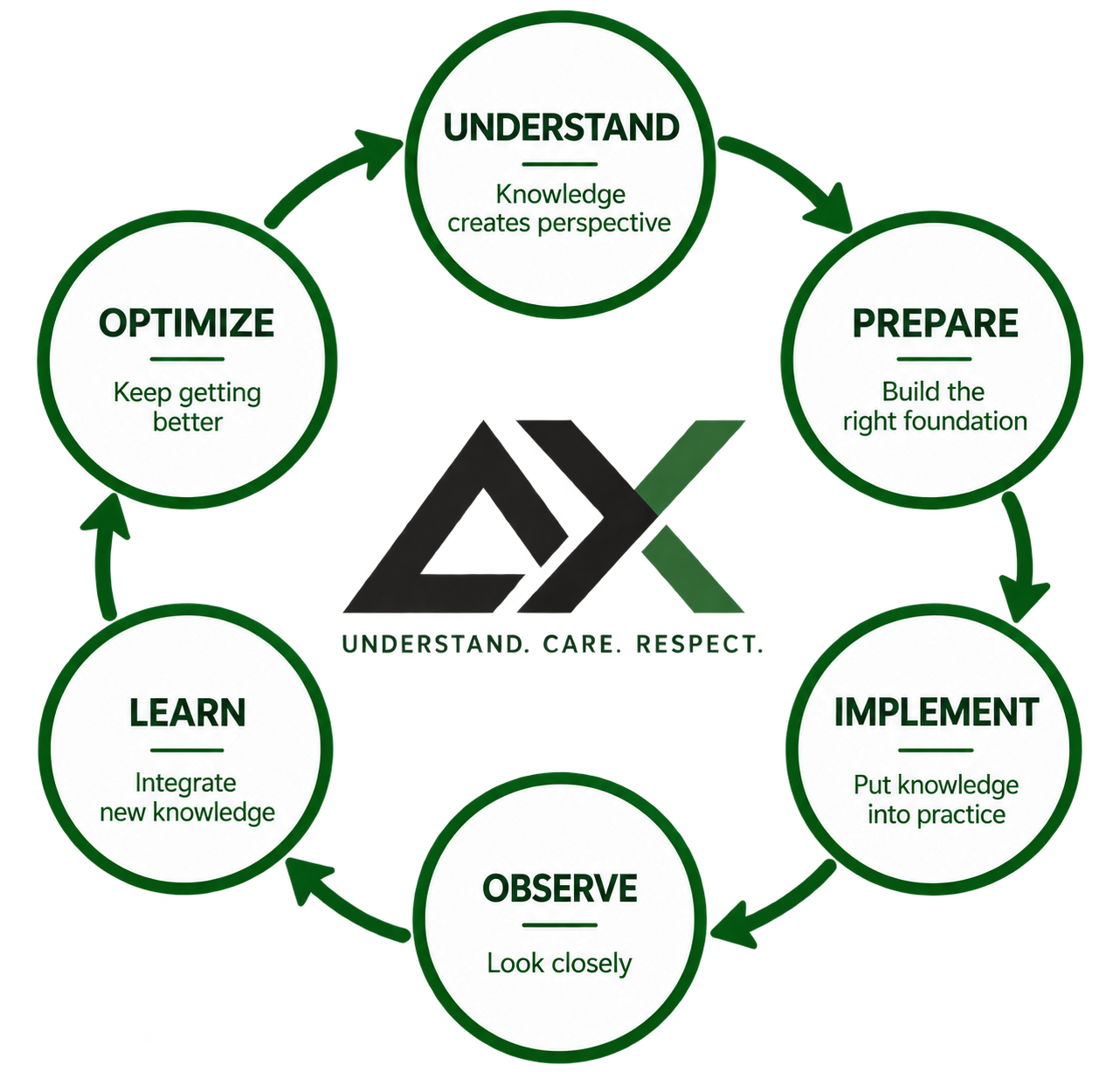
Good husbandry is not about perfection — it is about being responsible, attentive, and willing to continually improve.